Special Session: Cochlear Implantation and NeurodevelopmentNon-auditory Consequences of Developmental Hearing Loss Hearing loss in childhood has far-reaching medical, social and educational consequences. Currently, access to hearing is, as a rule, provided in the second and the third year of life, which allows the acquisition of spoken language, but is still too late for unlocking the full developmental potential of the brain. While bilaterally children implanted in the first 24 months perform at age-appropriate level at 5.0-7.5 years, earlier implantation within this time provide better outcomes (Illg et al., 2024, J Speech Lang Hear Res). The connectome model of deafness suggests the impact of deafness on cognitive function (Kral et al., 2016, Lancet Neurol). We evaluated cognitive functioning in 229 age-matched, normal-hearing (NH) children and 127 children with hearing impairment (HI) and cochlear implants using a parent questionnaire (LEAF). Consistent with previous reports (Kronenberger et al., 2014), children with hearing loss significantly underperformed in sustained sequential processing, processing speed, working memory, reading skills, written expression, novel problem-solving, mathematical skills, and comprehension and conceptual learning (two-tailed Wilcoxon test, p<0.05). They did not differ from NH children in visual-spatial organization, factual memory, or attention (p>0.05). A generalized linear model (GLM) with the LEAF composite score as the dependent variable and duration of deafness and group (NH vs. HI) as predictors confirmed a significant effect of group on the mean score. Speech recognition data were additionally available for 63 HI children. Bivariate and multivariate (GLM) analysis did not confirm an influence of speech comprehension on cognitive functions. Our present our work with pharmacologically-induced deafness in rats (in absence of language) showed increased impulsiveness, increased play fighting, deficits in conceptual learning, increased forgetting, together with alterations of neuronal activity in prefrontal cortex (Jelinek et al., 2023, Curr Res Neurobiol; Johne et al., 2022, Front Neurosci & unpublished data). In conclusion, hearing loss directly affects cognitive function even in absence of its effects on language. Supported by EU (ITN Comm4Child) and Deutsche Forschungsgemeinschaft (Exc 2177/1).
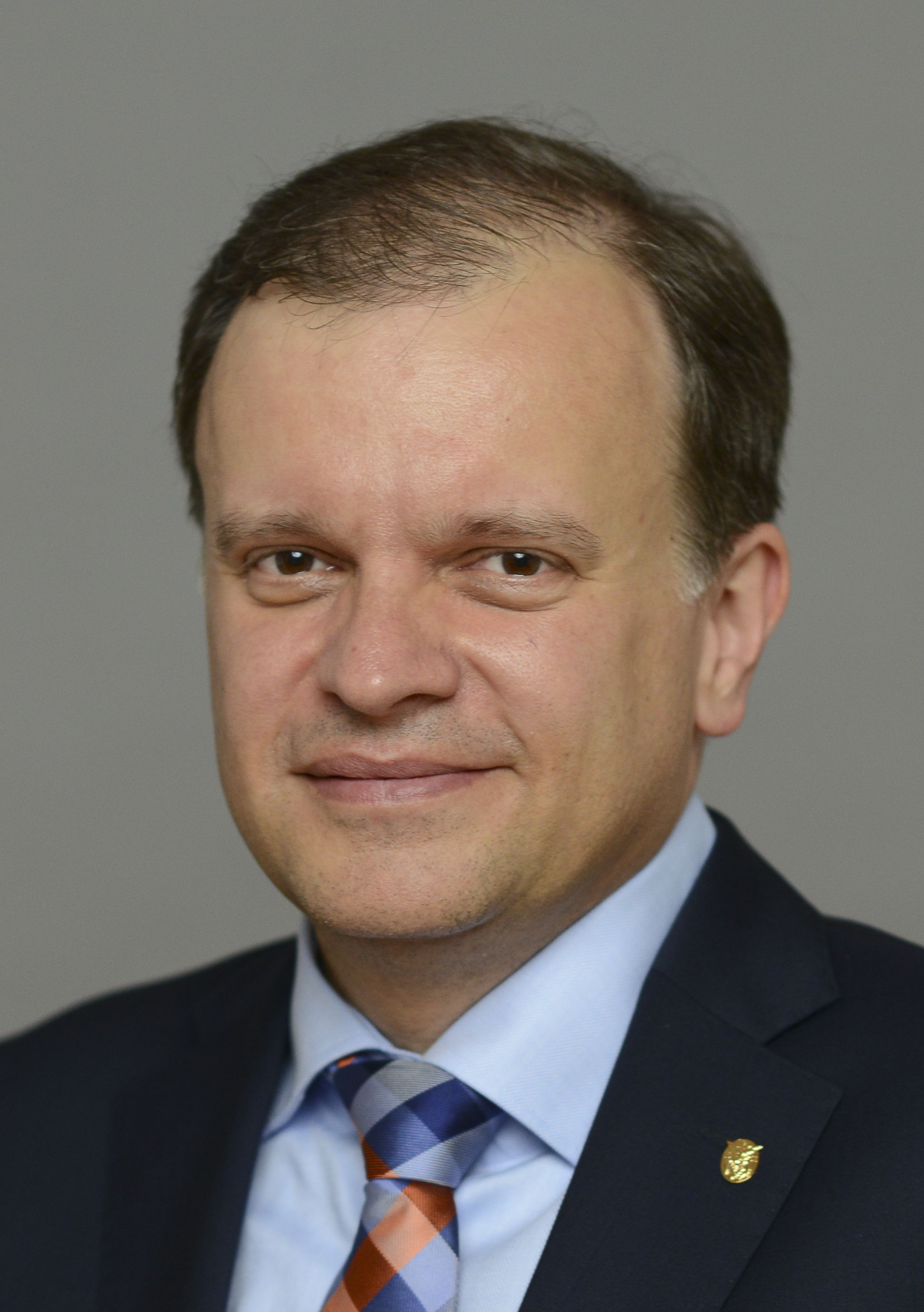
Andrej Kral, MD, PhD, is a Professor of Systems Neuroscience at Macquarie University and Professor of Auditory Neuroscience at Hannover Medical School, where he holds the Chair in Experimental Otology. Dr. Kral received degrees from the School of Medicine, Comenius University in Bratislava (MD 1993, PhD 1998). Dr. Kral is specialized to auditory neurophysiology in animals (rodents, cats) and humans (EEG). His research interests include hearing loss, central effects of deafness for brain development and cognition, neuroplasticity, cochlear implants and neuroprosthetics (website: www.neuroprostheses.com). Dr. Kral serves a the boardmember and from 2026 as a co-speaker of the Cluster of Excellence Hearing4All, has been the founding chair of the PhD Program “Auditory Sciences” at the Hannover Medical School. He is member of the editorial board of Hearing Research. In 2017 he has been elected a member of the German National Academy of Science and in 2018 of the Collegium Oto-Rhino-Laryngologicum Amicitiae Sacrum. He received the 2024 Pioneer Award in Basic Science from the Association for Research in Otolaryngology (USA) for his fundamental work on understanding brain plasticity after hearing loss. With H. Maier and F. Aplin, he published a textbook on neuroprosthetics (“Prostheses for the Brain: Introduction to Neuroprosthetics”, 2021, Academic Press) and co-edited the volume on “Deafness” (vol. 47, 2013) of the Springer Handbook of Auditory Research with A.N.Popper and R.R.Fay. His lab received funding, among others, from German Research Society (Deutsche Forschungsgemeinschaft, including Cluster of Excellence Hearing4All), National Science Foundation (USA), German Academic Exchange Service (DAAD), European Union, William Demant Foundation and cochlear implant and hearing aid industry.
|